Design the piece before you build the piece.
The most expensive prototype is the one that shouldn't have been built. The product designer lets your team see a concept as finished imagery, from silhouette to fabric to a staged room, while it's still a conversation, not a purchase order.
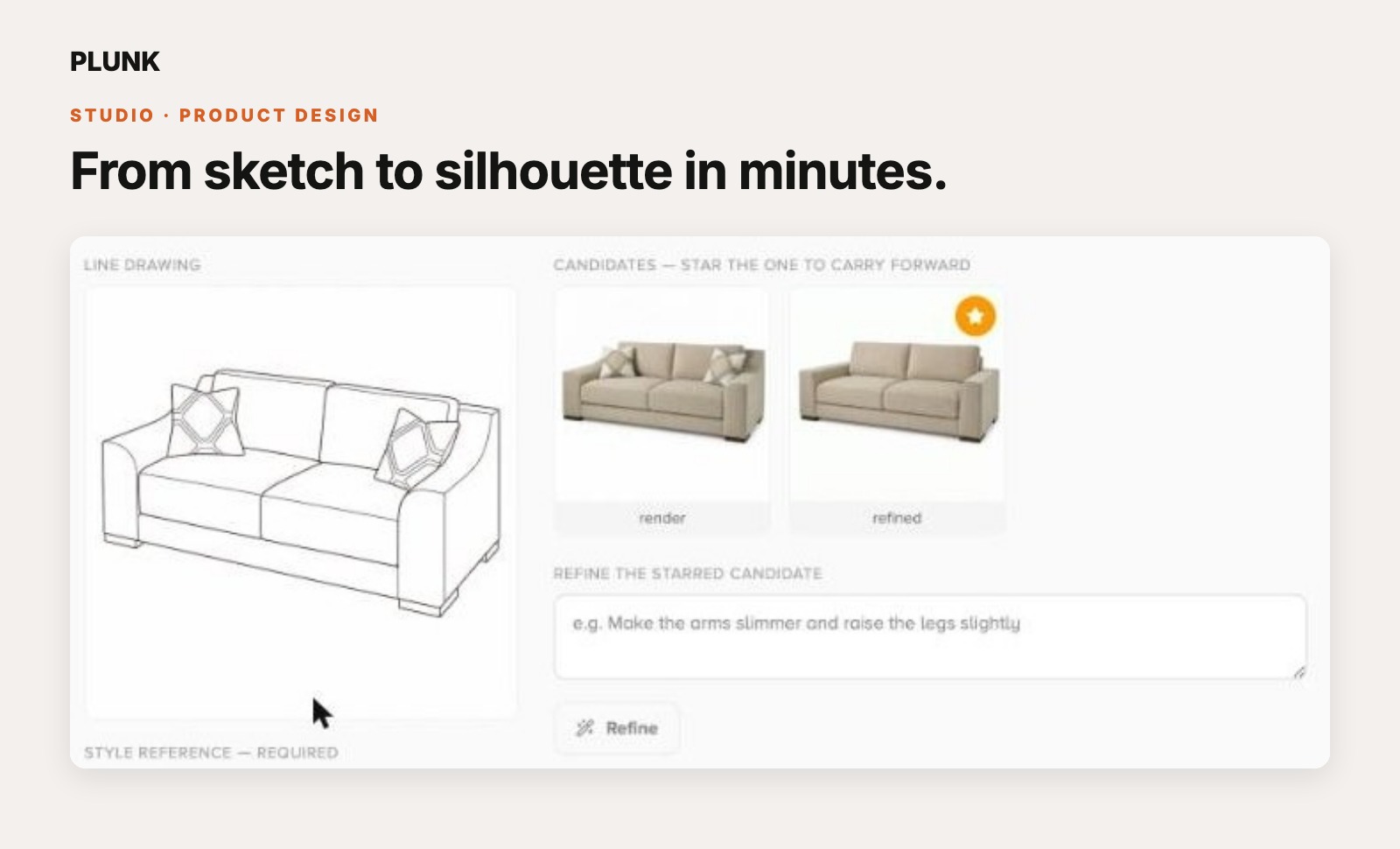
From a sketch or a sentence to a silhouette
Start from a rough sketch, a reference photo, or a written brief. The designer generates clean product silhouettes you can iterate on, adjusting arm profile, base, and cushion count until the shape is right, each round in minutes.
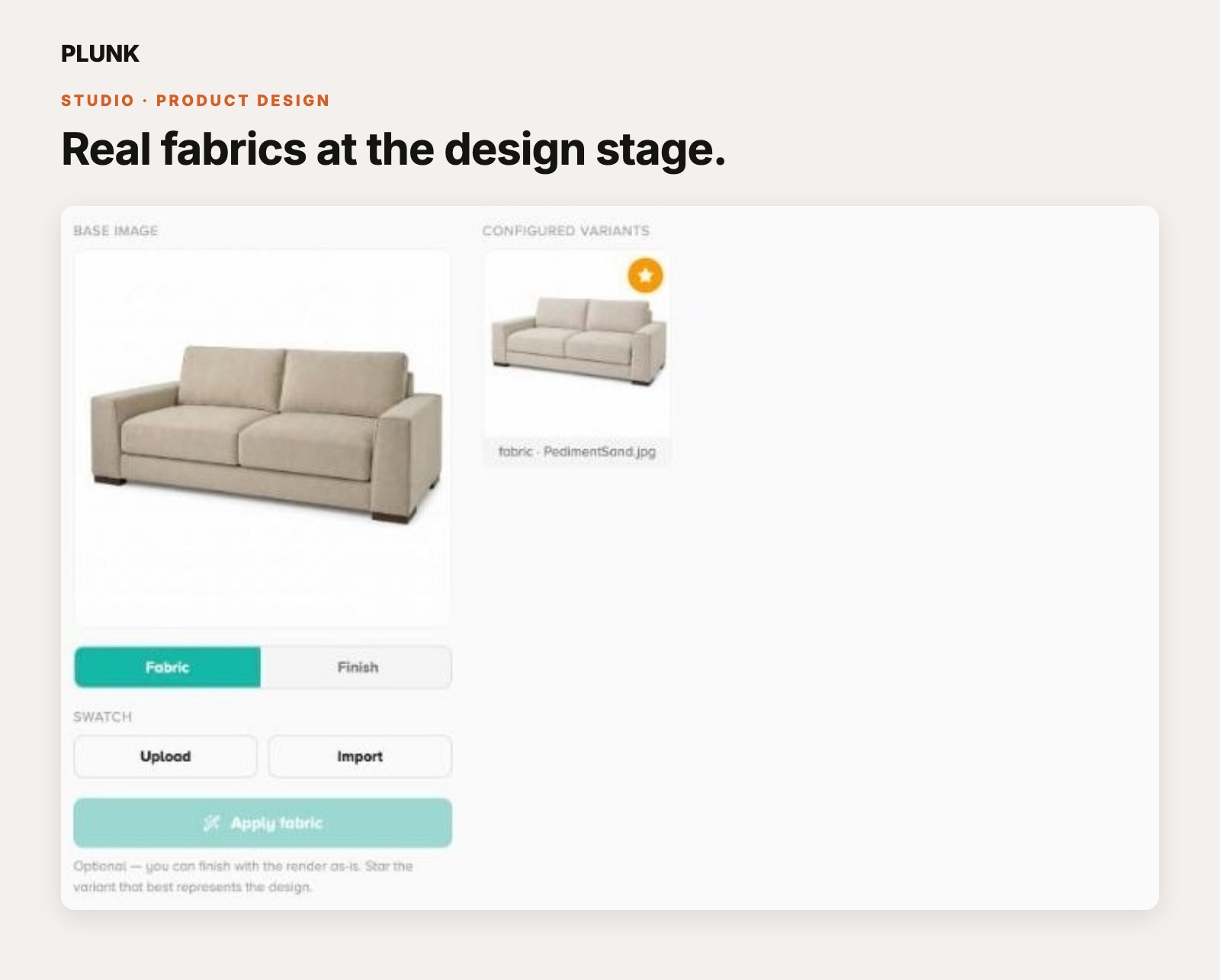
Real fabrics and finishes at the design stage
Apply the actual fabrics and finishes the piece would ship in, from your book or a mill's new collection, while the design is still moving. Colorway decisions happen on imagery, not on faith, and the whole introduction can be visualized before a frame is cut.
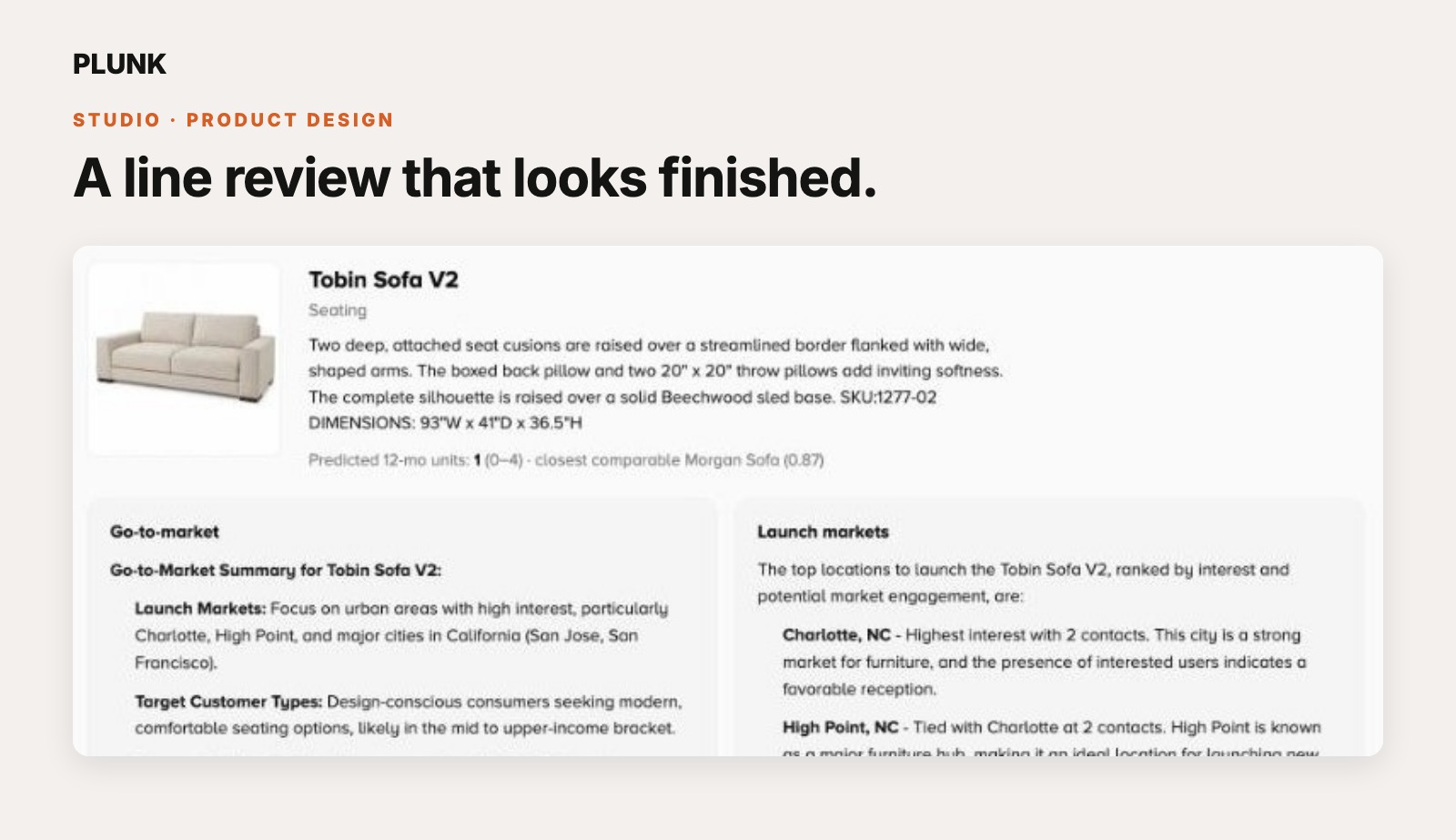
Angle packs, 3D turns, and the piece in a room
For the line review: front, three-quarter, side, and back views as a consistent angle pack, an interactive 3D turn (preview scale: approximate, not shop-drawing), and the concept staged in a styled room scene. The presentation looks like the piece exists.
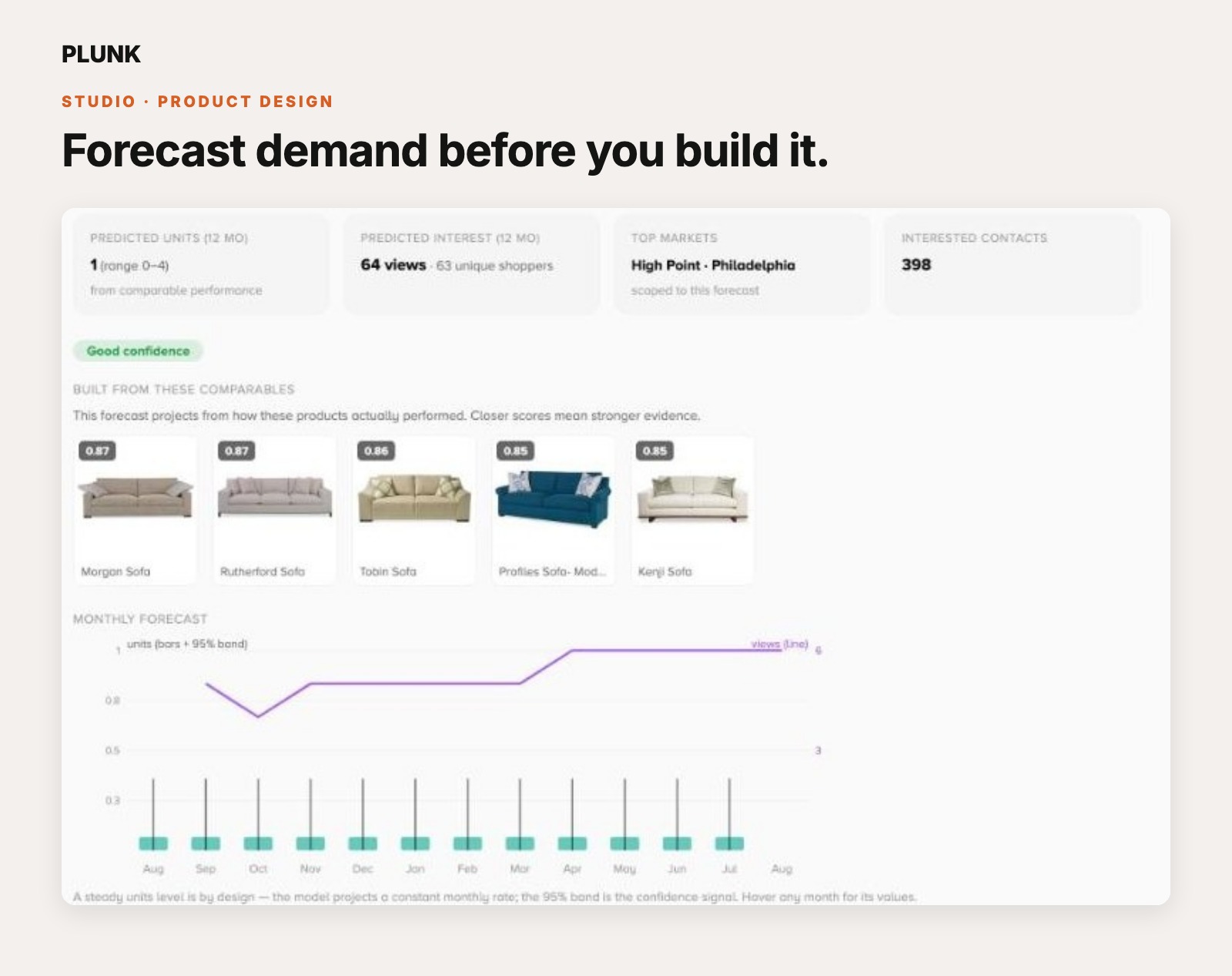
Sell-in before production
Every concept gets a demand forecast built from the comparables already selling in your line: predicted units, interest, launch markets, and the contacts most likely to want it. Put the imagery in front of buyers or reps, let the numbers and the reaction guide what gets built, and the winners go into the same pipeline that renders your production imagery; nothing gets redone. And with Plunk Commerce connected, the forecast runs on your own performance and sales data.
Bring the idea you almost built last year.
The best demo is a real concept from your backlog. We'll take it from sketch to staged imagery on the call.